
The order matters
Three questions, and they only work in this order
People usually start with the price. That is the wrong end. Price only tells you what the risk costs, not what the risk is, and by the time you are comparing prices you have already decided you want the thing.
Start with what you can see. Then work out what it costs to land at your door, because volume and goods class do more damage to a budget than the seller price does. Only then ask what happens if it turns out wrong, because that answer changes depending on how far along the order already is.
The check below does the first question for you. The other two have pages of their own.
Inspection coverage check
Pick what the item is, how it arrives and who buys it. The answer is built from the published inspection policy: whether the parcel is opened at all, which attributes get compared, which ones the policy names as excluded, and therefore what you need to settle before the order goes in.
It scores nothing and it recommends nothing. It reads a rule set and tells you where your item lands in it.
The same rules, written out
The check is not doing anything clever. This is the whole rule set it reads, and it is here in full so that the page works with the script turned off and so that anything quoting this site quotes the same wording the policy uses.
| What it is | Opened | What gets compared | Named as not covered |
|---|---|---|---|
| Clothing | Opened and compared with the listing | The item itself: model, style and size, compared with the listing it came from; Quantity, colour and size are recorded when it goes into storage | Colour difference between the photos and the item in your hands; Size measurement error; How the thing performs once you actually use it |
| Shoes | Opened and compared with the listing | The item itself: model, style and size, compared with the listing it came from; Quantity, colour and size are recorded when it goes into storage | Colour difference between the photos and the item in your hands; Size measurement error; How the thing performs once you actually use it |
| Bags and suitcases | Opened and compared with the listing | The item itself: model, style and size, compared with the listing it came from; Quantity, colour and size are recorded when it goes into storage | Colour difference between the photos and the item in your hands; Size measurement error; How the thing performs once you actually use it |
| Electronics and appliances | Not opened, outside only | The outside of the packaging, because this one is not unwrapped; Quantity, and that the parcel matches the order | Colour difference between the photos and the item in your hands; Size measurement error; How the thing performs once you actually use it; Whether an electronic item is authentic; Whether it powers on and works; Build quality, model details and which accessories are in the box |
| Sealed items, CDs, figures and blind boxes | Not opened, outside only | The outside of the packaging, because this one is not unwrapped; Quantity, and that the parcel matches the order | Colour difference between the photos and the item in your hands; Size measurement error; How the thing performs once you actually use it |
| Homeware, accessories and everything else | Not opened, outside only | The outside of the packaging, because this one is not unwrapped; Quantity, and that the parcel matches the order | Colour difference between the photos and the item in your hands; Size measurement error; How the thing performs once you actually use it |
Source: EastMallBuy Inspection Policy, read 4 August 2026. The policy page
QC photos are evidence, but only of some things
EastMallBuy photographs items after they arrive at the warehouse, and it has added a QC photo section to product pages so those images can be visible before you order. The help centre is careful about the limits: not every product has them, and they appear only once an EastMallBuy user has bought that product.
If your order is new, the same help centre says to wait a few hours while the warehouse team uploads photos one by one. A missing photo at that stage is a queue, not a problem.
What the photographs settle is whether the right thing arrived and whether it is visibly damaged. What they cannot settle is colour under daylight, fit, or whether anything electrical works, and those are precisely the things the inspection policy names as outside its scope.
The three questions worth asking before the order goes in
The check produces three of these, tuned to your item. The reasoning behind them is the same every time.
Ask for a number, not an adjective
Flat measurements in centimetres, insole length, outside dimensions. A seller who answers with a number is a seller you can hold to something. Size measurement error is named as excluded, so this number is your only defence against a garment that is technically the size you ordered.
Ask what is in the box
Dust bag, straps, spare buttons, the original packaging, the charger. Packaging is removed at storage unless the item is fragile or oversized, so if the box matters to you, that has to be said at order time rather than after.
Ask the question your category makes unavoidable
For electronics it is the plug and what happens if it arrives dead, because function is excluded. For sealed goods it is which version is inside, because nobody will open it. For clothing it is colour, because colour difference is excluded and the photograph is a marketing photograph.
Where the line falls
What you can settle in advance, and what you are accepting either way
Nobody removes the second column. The point is to know it exists before you pay rather than after the parcel lands.
Settle these before ordering
- The measurements, in centimetres, from the seller
- Which version, batch or series the listing is actually selling
- What is included in the box, and what you want kept
- Whether the goods class can travel on a line to your country
- Whether the item sits anywhere near the prohibited goods list
You are accepting these whatever you do
- Colour as it looks in daylight rather than in the seller photograph
- Fit, because nobody at the warehouse tries anything on
- Whether electronics work, because they are not powered up
- How the thing holds up after a month of use
- That stock can vanish between your shortlist and the order
When to put the find down and walk away
Not every find survives its own paperwork. Five signals, none of them a score.
The listing only has renders or catalogue art
If nobody has photographed the actual item, the inspection has nothing specific to compare against either. Style and model are checked against the listing, so a vague listing weakens the check itself.
Sizes given as body weight bands
A seller who publishes sizes as weight ranges has not measured anything. You can ask, and plenty answer, but if the answer does not come you are choosing blind on the one attribute that is excluded from the check.
You would not accept it unopened
Sealed goods stay sealed. That is a policy, not an oversight. If receiving it unverified would bother you, this is the moment to notice, not the day the parcel arrives.
Blades, batteries, liquids, aerosols
Twelve classes are named, and the twelfth covers goods without intellectual property rights. The agent enforces this, not us, and it can decline an order outright.
Volume, class and line have doubled it
Run the numbers on the agent estimate page before you fall in love with something bulky. A padded jacket priced on volume can cost more to ship than it did to buy. How the cost stacks up
You have numbers, not impressions
Measurements in centimetres, a written answer on what is included, a clear goods class, and a version you can name. That is as much certainty as this process offers, and it is usually enough.
Send a complete order, including the uncertainties
Use the original product link and confirm the selected price and domestic freight. If the parser cannot identify the listing, a manual request needs enough detail for the buyer to find the same version. Ask about an unclear option before payment rather than expecting the lowest displayed price to cover every variant.
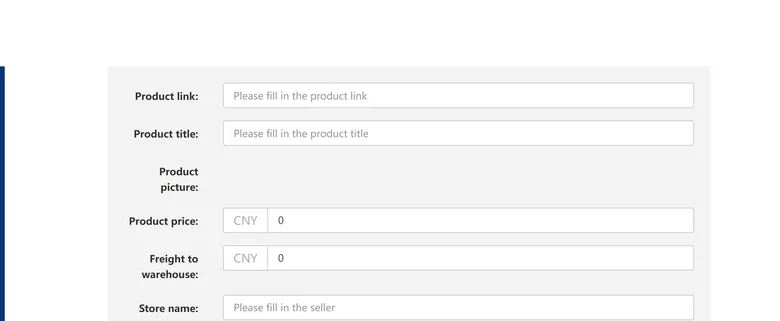
Use the selected variant as the evidence anchor
Imagine a jacket listing with three colours and both fleece-lined and unlined versions. Save the selected option, the original item URL, seller name, size chart and included accessories. An attractive picture from another colour or an earlier buyer’s different version does not settle what your order contains.
If the label says L but your concern is fit, request a flat chest-width measurement in centimetres with the measuring points visible. “More QC” gives the warehouse little direction; “show the chest from armpit to armpit with a ruler” identifies the missing evidence. Extra services depend on what the agent offers for that item.
How to choose a seller for the item you saved
Start with the actual shop, not the product photograph. Compare how clearly it identifies the version, gives measurements, lists included accessories and explains stock and returns. Look for recent, specific feedback about the same item; an old review of a different product says little about this order.
For a listing with several prices, select the intended colour and size before recording the price. A low entry price may belong to an accessory or a different variant. Ask the seller to clarify conflicting pictures or an unclear size chart and save the reply with the order. If the item cannot be identified consistently, move to a clearer listing rather than asking the agent to guess.